Industrial pyrolysis plants engineered for countries that import their fuel and stockpile their tires. Produce heavy fuel oil, carbon black and recycled steel on-site. Payback measured in months, not years.
The Persian Gulf war has pushed heavy fuel oil to multi-year highs. For countries that import every liter of their petroleum, this is a direct tax on cement kilns, steel mills, ceramic works, boiler rooms and power plants. At the same time, end-of-life tires pile up in landfills. Pyrolysis collapses both problems into a single revenue stream: the tire becomes the barrel.
Rise in heavy fuel oil spot since the Iran escalation began.
End-of-life tires generated globally each year.
Of tire mass recoverable as heavy fuel oil.
Of external fuel imported once the plant is running (self-heating).
Click a flag to read the localized market case with in-country economics and fuel prices.
Indicative industrial HFO / Bunker-C spot price and national consumption. The larger the local consumption, the easier it is to place every tonne of pyrolysis oil without trucking far from the plant.
Prices are indicative industrial HFO / Bunker-C / MFO-380 ranges as observed April 2026. Local retail rates may differ with taxes, subsidies and port premiums.
A CE and ISO certified thermochemical reactor sized for a single 40-foot flat rack plus two 40-foot high-cube containers. Ship, install, commission. One operating cycle per 24 hours.
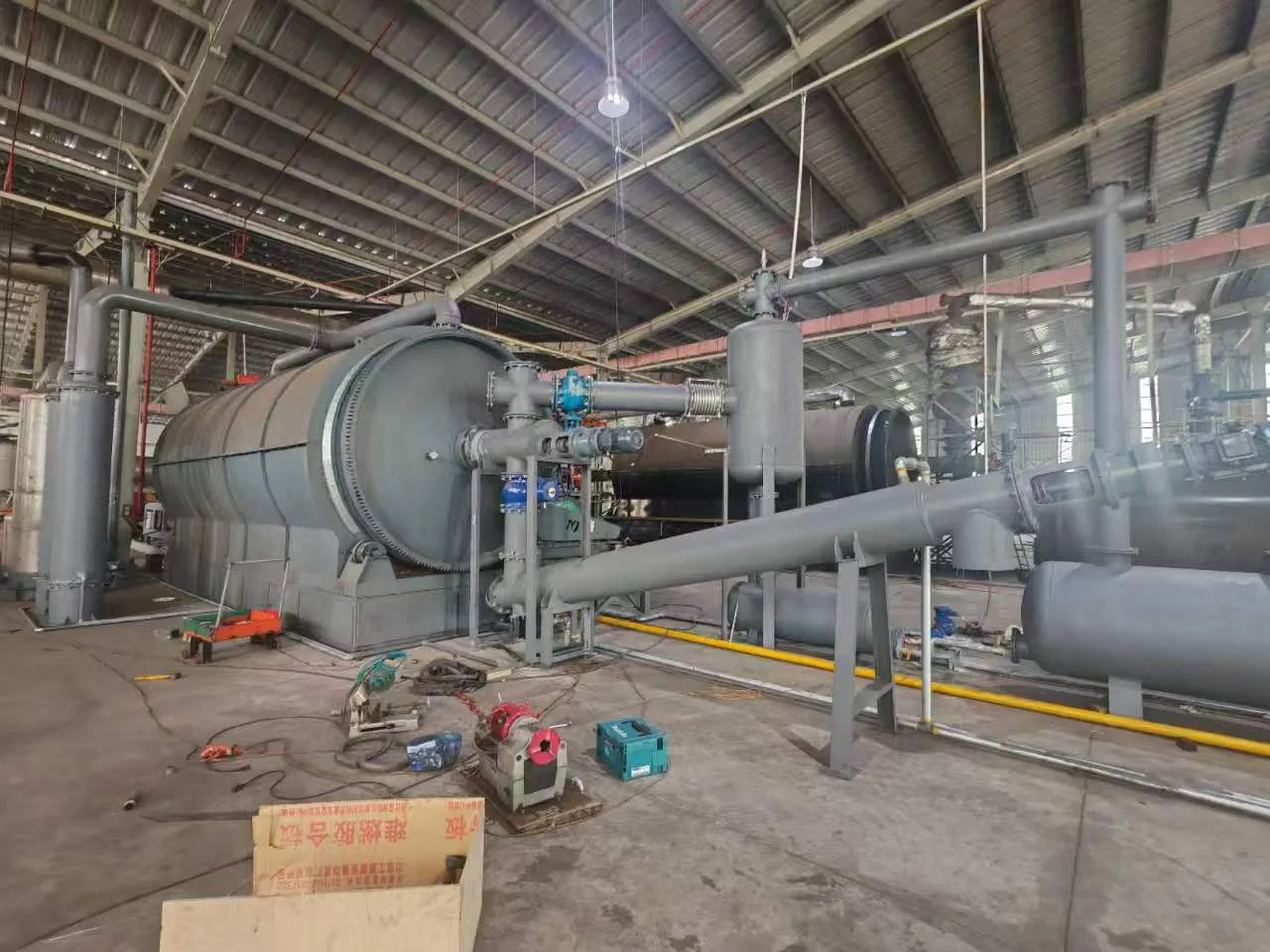
Q345R boiler-grade steel, 18 mm shell with roller ring and integrated refractory casing. Pre-assembled and shipped as one unit to cut civil works.
10–12 t/day for plastic bales. Also validated on oil sludge, medical waste, cable insulation and rubber scrap.
360 L of pyrolysis oil for the first ignition, then the reactor runs on its own syngas. Zero external fuel after startup.
Three shifts. No advanced operator training required; we provide it on-site.
Feed 1h · pyrolysis 13–15h · cooling 5h · carbon discharge 2h · steel 1h. One batch per 24h.
ISO 9001/14001/45001. CE marked per 2006/42/EC. SGS-verified oil quality and emissions testing available on request.
Whole or pressed tires loaded through hydraulic door
Oxygen-free thermal cracking up to 450 °C
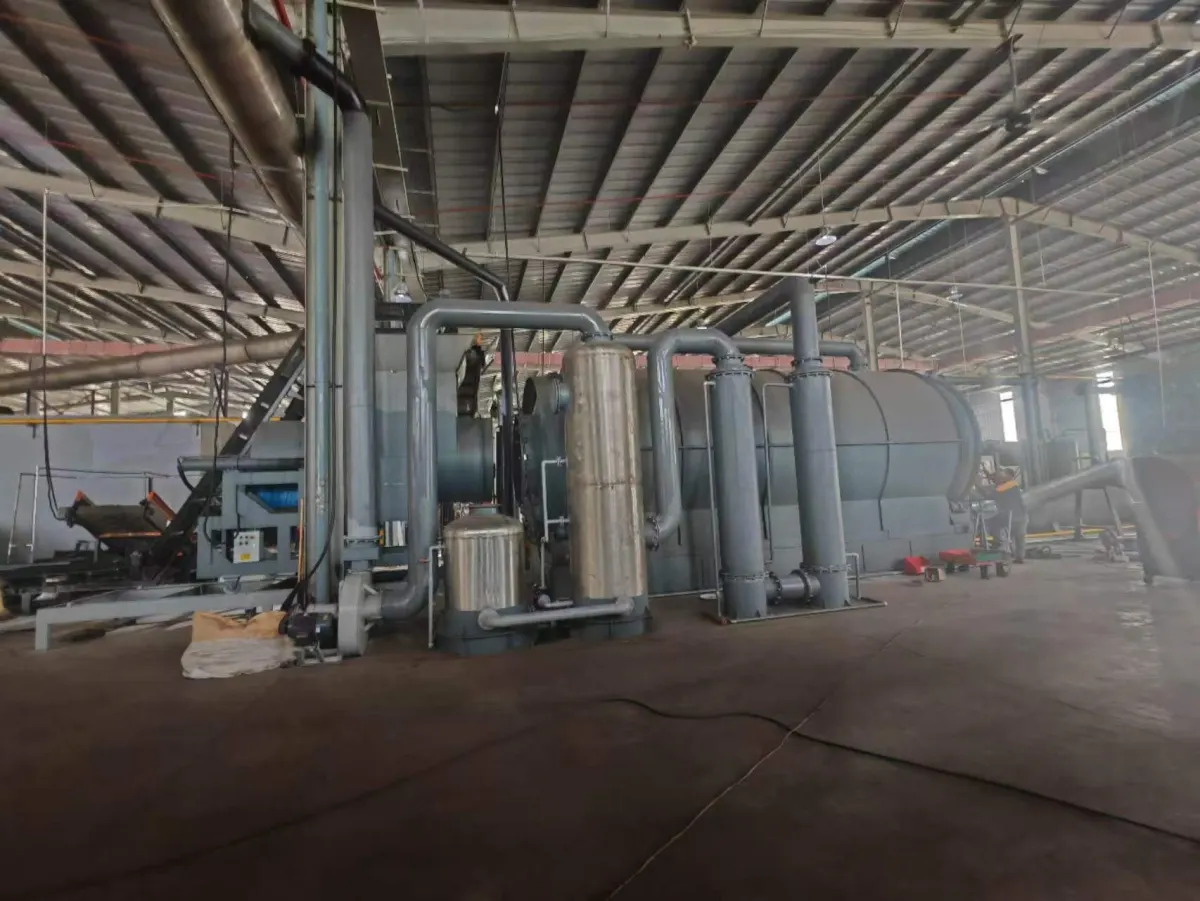
Modular condenser train separates heavy and light oil
Oil to tanks, carbon black sealed, steel wire recovered
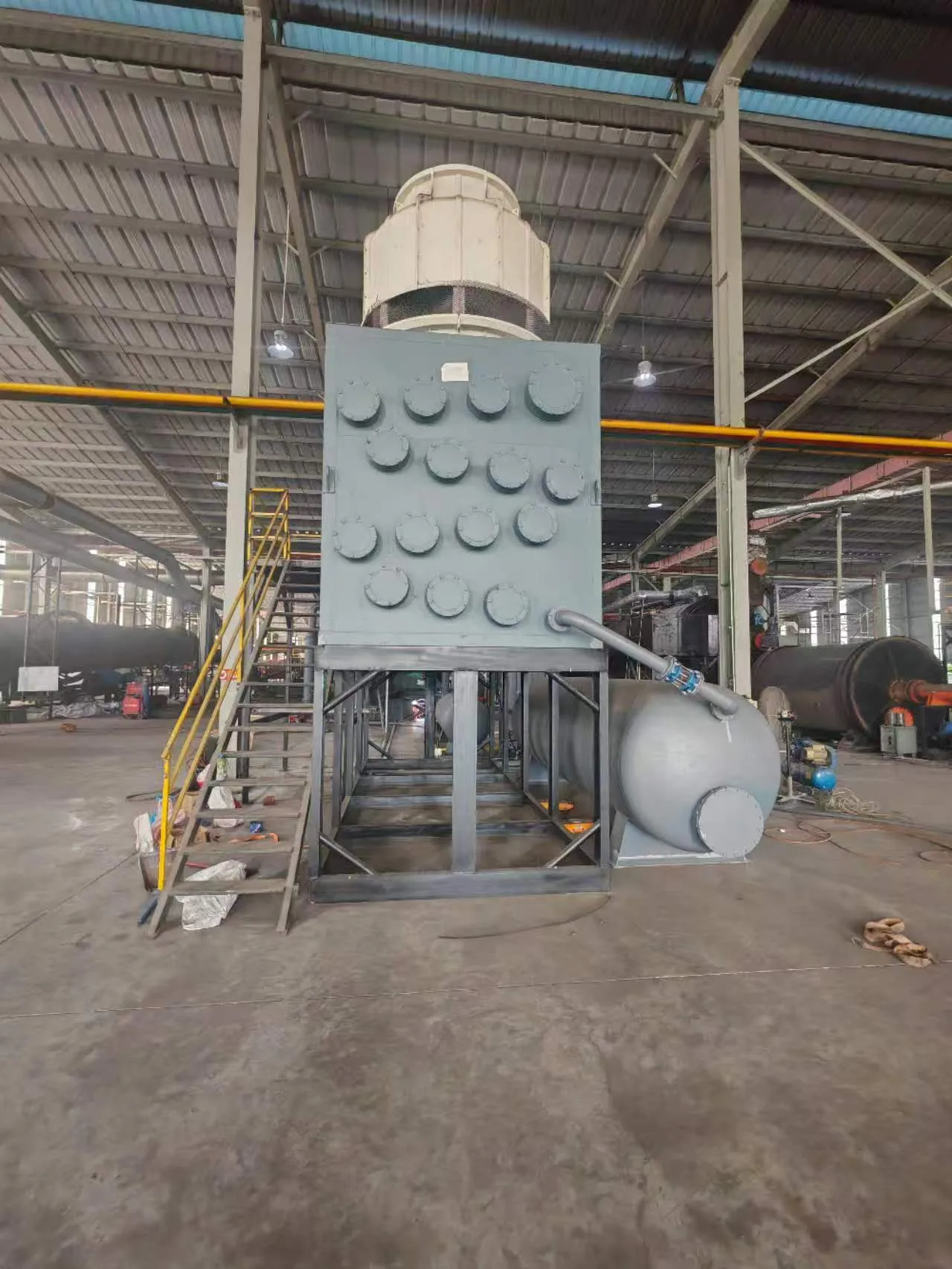
The syngas generated during cracking is captured and routed back to the heating furnace. Flue gas passes through condenser, water scrubber, ceramic filter and spray stage before release. A stainless-steel desulfurization tower meets EU emission norms. SGS-verified emissions reports are available for permitting dossiers.
Sells directly to cement kilns, ceramic factories, steel works, boiler plants. Optional on-site distillation yields non-standard diesel.
Briquetted for fuel, milled to higher grade for rubber fillers and masterbatch, or asphalt additive.
Clean steel bead wire, sold directly to scrap buyers and rolling mills.
Recycled to the reactor furnace as the primary heat source after ignition. Zero external fuel required.
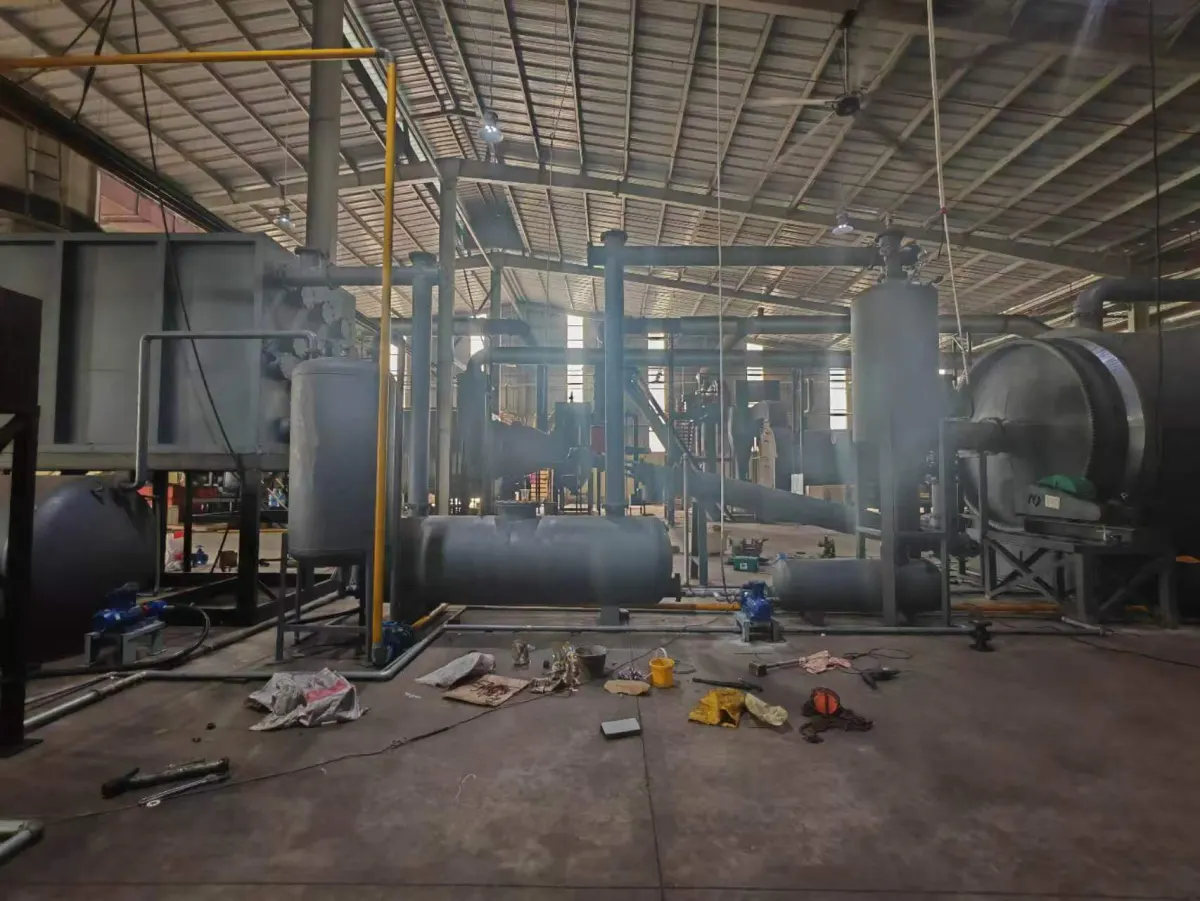
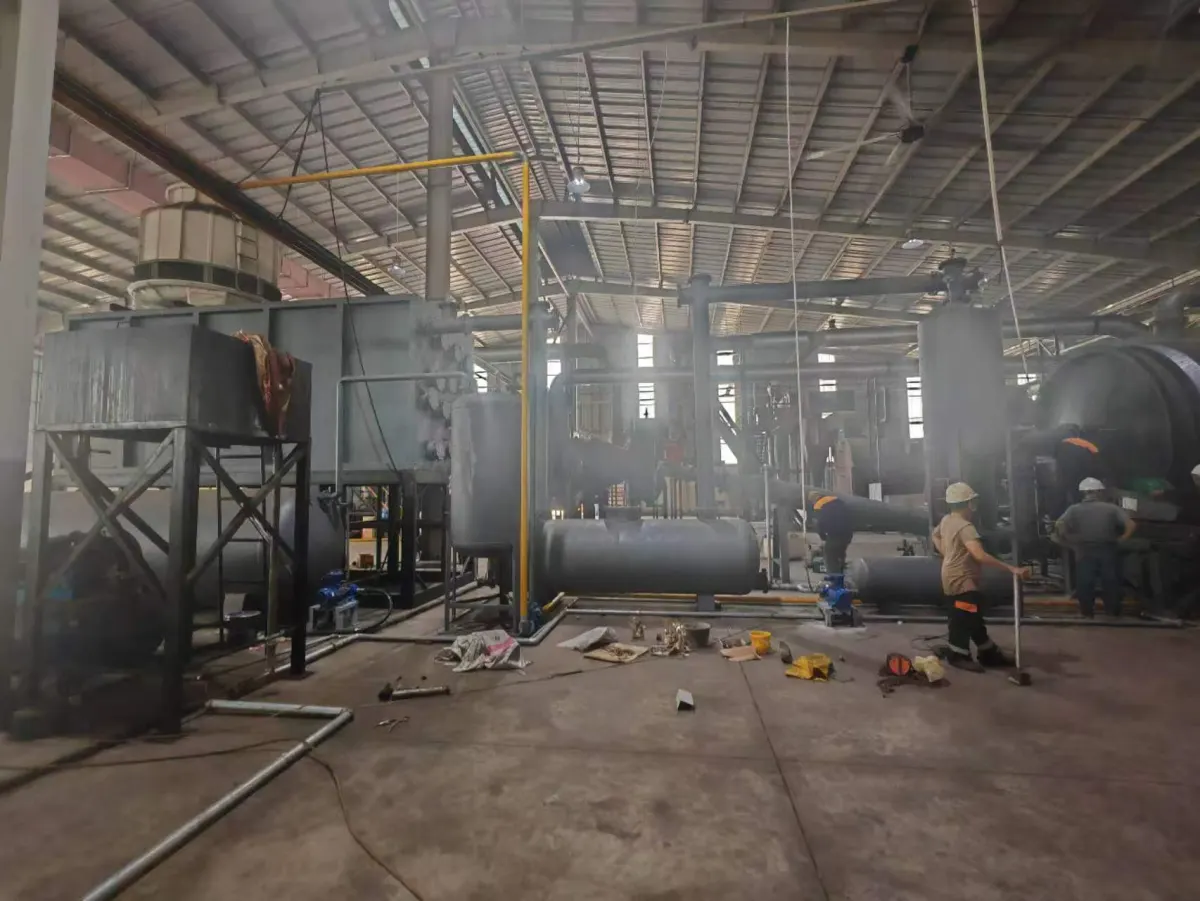
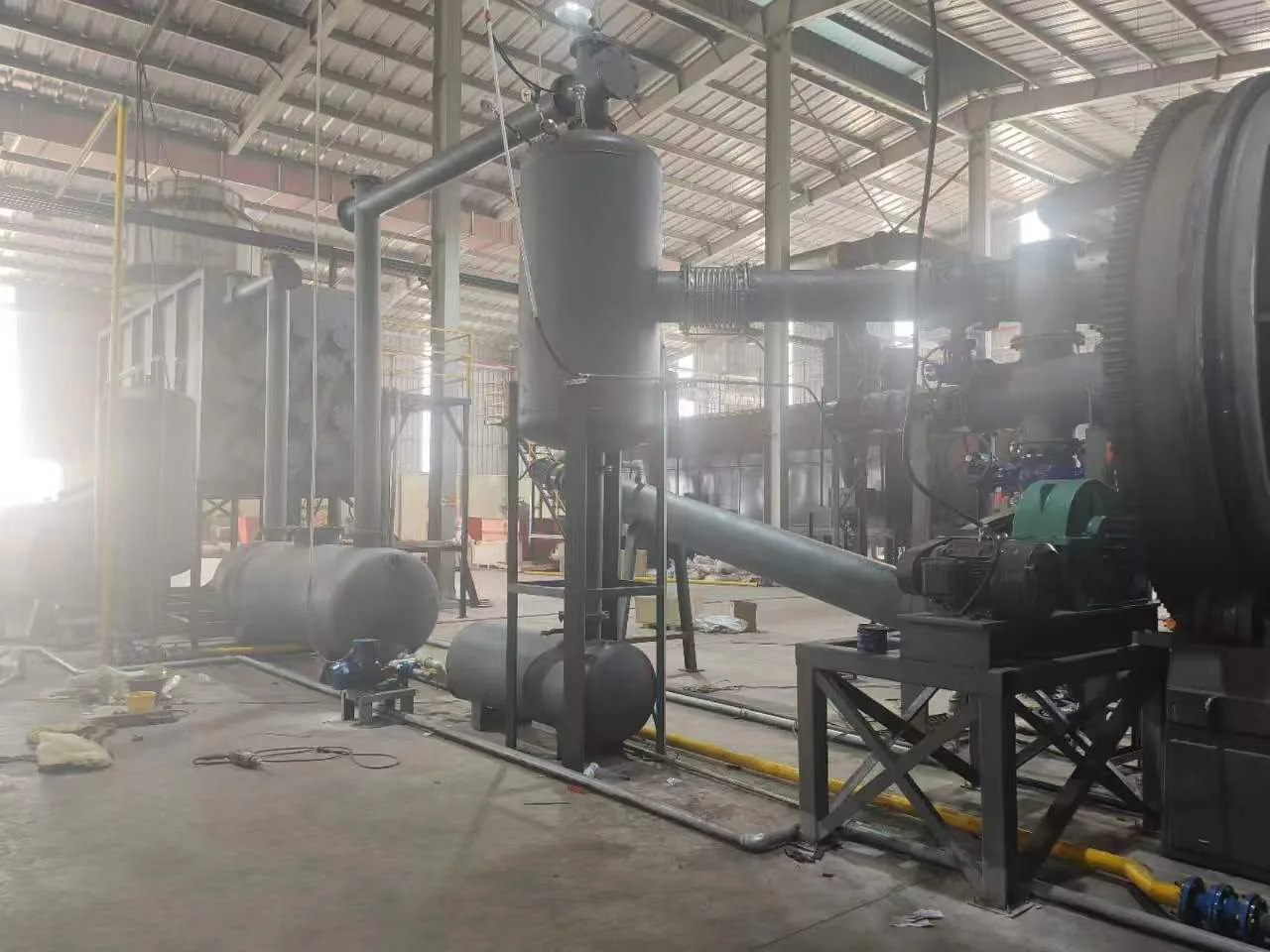
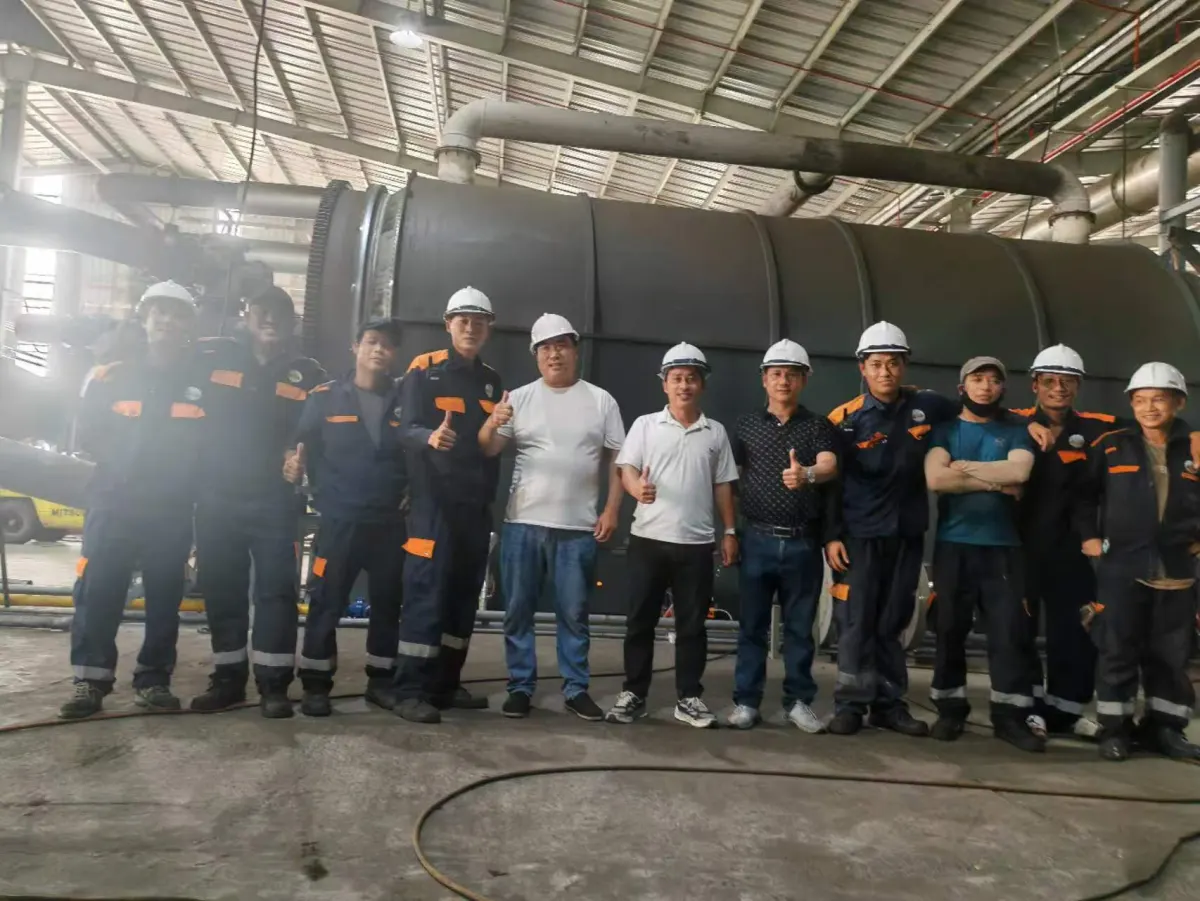
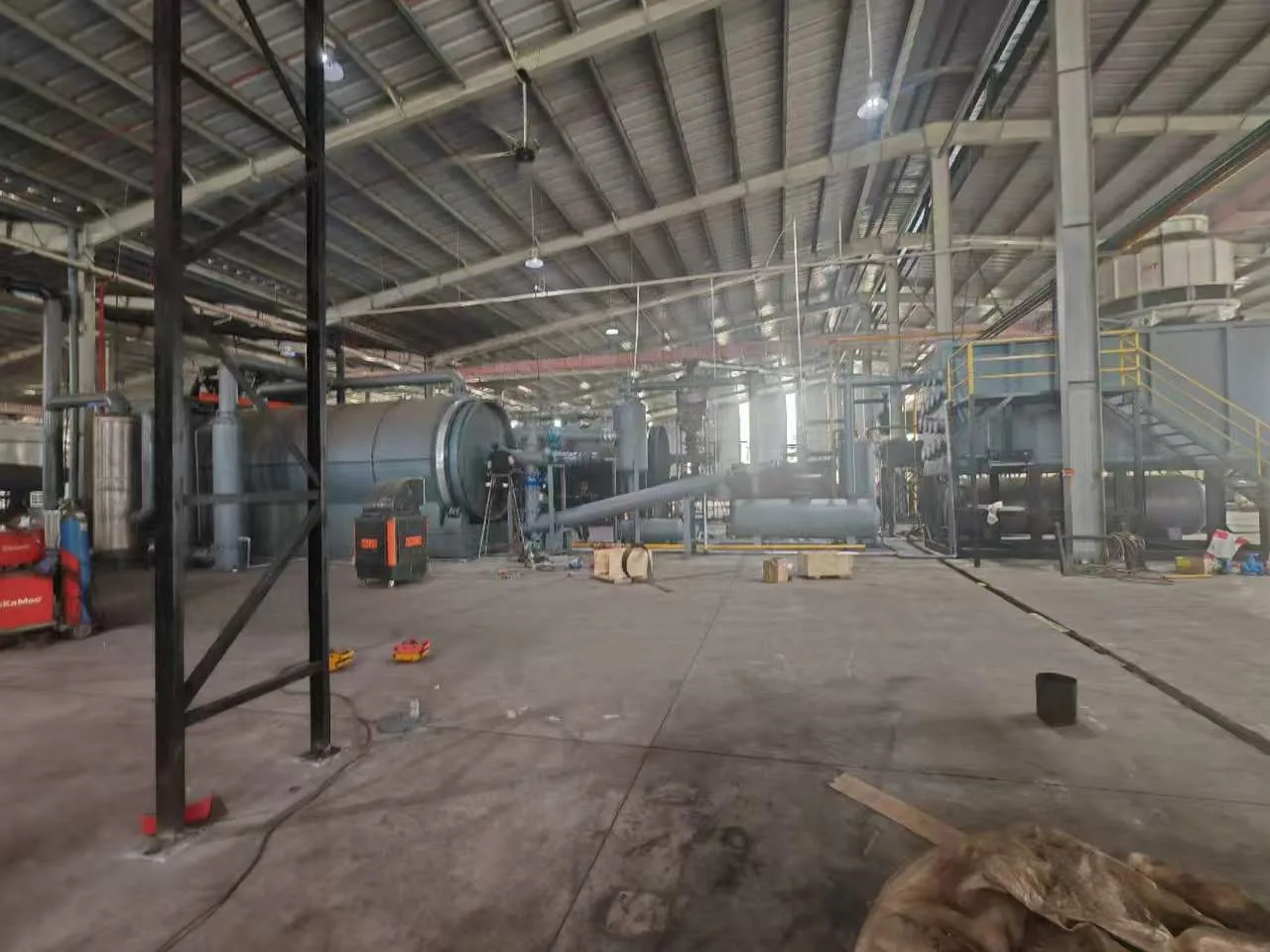
Photos captured during commissioning and operation. Reactor, condenser train, desulfurization tower, and the people who actually put steel on the pad.


Transparent assumptions. Worst-case, base-case and upside scenarios. Sell the oil at 20% below the prevailing local HFO spot and the plant still pays itself back in months.
Revenues from the three marketable outputs, minus the cost of sourcing the tires. CAPEX and plant operating costs are handled in the formal quotation.
Assumes 15 TPD tire throughput, carbon black sold at USD 60/t, steel wire at USD 150/t. Revenue figures are gross; plant operating costs and CAPEX are addressed in the formal quotation. Typical return on investment ranges from 12 to 18 months depending on local HFO price and feedstock contract.
We share the detailed investment package, lead time, payment schedule and local operating assumptions in a tailored quotation after a short qualification call. Typical ROI sits in the 12 to 18 months range.
Ask for a quotation →BIM operates a large-scale biomass pyrolysis facility in India, processing up to 5 tonnes of feedstock per hour. Everything we ship has already been stress-tested against real production targets, real operators, real supply chains.
When you buy a plant from us, you also buy access to the engineering decisions we have already made, the operational mistakes we've already corrected, and the feedstock logistics we've already debugged in the field.
Biomass processed at our pyrolysis plant in India
Years carbon permanence across our biochar operations
Equipment warranty, plus lifetime technical support
Online technical assistance after commissioning